
Smart Landscaping for Driveways and Paths
Smart landscaping for driveways and paths delivers measurable gains in water efficiency, safety, longevity and operational cost control. When sensors, adaptive controllers and networked lighting are combined with permeable surfaces and embedded structural monitoring, properties see lower utility bills, fewer winter liability incidents and extended pavement life. The following examines technology choices, implementation priorities and long term return for contractors and engineers.
Core technologies and performance benefits

Modern projects rely on three technology clusters: environmental sensing and irrigation control, active safety and energy systems, and structural monitoring with communication layers. Irrigation systems using soil moisture sensors and weather adaptive controllers reduce outdoor water use significantly. The US EPA WaterSense program indicates that weather based irrigation controllers typically cut landscape water use by about 8 to 30 percent compared with clock timers. Soil moisture probes placed at root zone depth allow irrigation only when the substrate indicates deficit, which prevents overwatering that damages pavement edges and undermines base layers.
Lighting for pathways and driveways has moved from fixed daytime timers to occupancy aware LED systems that combine motion detection and presence analytics. Integrated motion sensors reduce night time energy use while sustaining safety lighting for pedestrians and vehicles. Solar powered luminaires paired with battery storage now provide reliable operation in suburban and rural settings; declining battery pack costs have made payback faster in regions with high evening rates.
Permeable pavement surfaces and smart drainage monitoring address stormwater management and structural health. Permeable concrete, interlocking pavers and porous asphalt can reduce surface runoff by 50 to 90 percent depending on design and infiltration capacity. Sensors installed in the subbase monitor saturation and conveyance, enabling automated alerts when clogging or compaction reduces drainage performance.
Embedded sensors for pavement health include strain gauges, dielectric moisture probes and temperature sensors. These devices detect early signs of base failure, freeze thaw cycles and localized overloading. Snow and ice management systems use surface temperature and moisture inputs to trigger electric heat mats or hydronic loops. Typical design heat flux for surface snow melting is in the 200 to 350 watts per square meter range, which balances rapid clearing with energy costs.
Wireless connectivity choices determine the feasible scale of a smart hardscape. The following comparison highlights typical performance and best uses of leading protocols:
| Technology | Typical Range | Power Profile | Bandwidth | Best Uses |
|---|---|---|---|---|
| Zigbee | 10–100 m (mesh) | Low | Low | Lighting networks, short range sensors |
| Z-Wave | 30–100 m (mesh) | Low | Low | Access control, lighting, battery sensors |
| LoRaWAN | 1–15 km | Very low | Very low | Wide area sensors, stormwater monitoring |
| Wi‑Fi (802.11) | 30–100 m | High | High | Video, gateway backhaul, bulk diagnostics |
Integration of these technologies into a centralized platform enables predictive maintenance. Machine learning models trained on sensor trends can identify clogging of permeable surfaces, predict irrigation controller drift and forecast battery degradation. Cybersecurity measures must include network segmentation, encrypted telemetry and robust firmware update procedures to prevent unauthorized access to gates, lighting controls and irrigation valves.
Implementation, standards, cost and long term maintenance
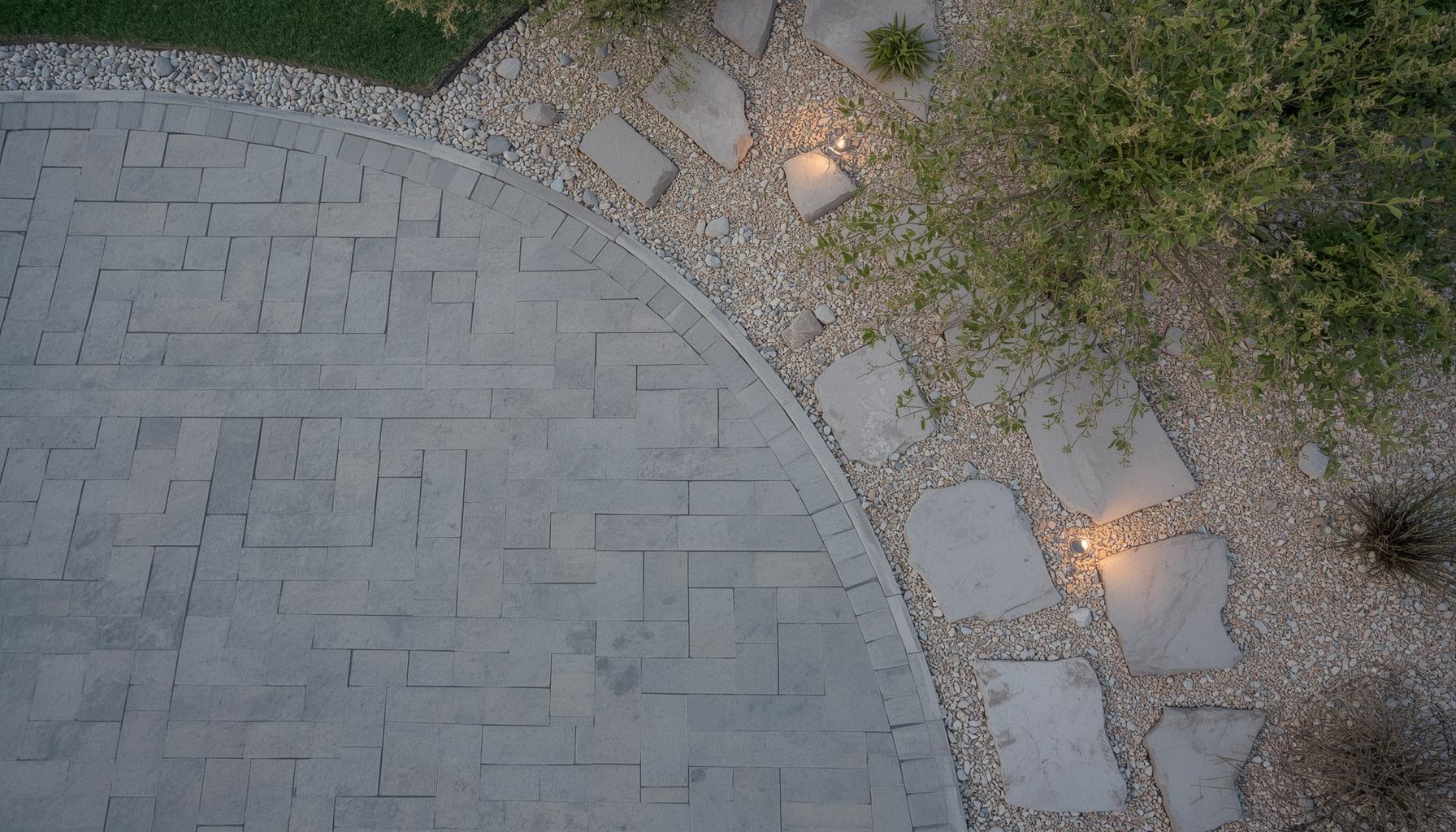
Retrofitting existing drives and paths requires assessment of existing grades, base condition and utility locations. Best installation practices emphasize preconstruction geotechnical testing for infiltration capacity and compaction, placement of conduit and power for future devices, and specification of device mounting that prevents water intrusion and thermal stress.
A practical checklist for contractors includes:
- Verify utility locations and obtain permits before trenching.
- Specify IP67 or better enclosures for outdoor electronics.
- Size conduit and junction boxes for future expansion.
- Calibrate soil and temperature sensors seasonally for regional norms.
- Document firmware versions and maintain an update schedule.
Materials compatibility is crucial. LED fixtures require corrosion resistant mounting in saline coastal climates. Permeable pavements demand compatible bedding materials and routine vacuum sweeping to preserve infiltration. Regulatory compliance will vary by municipality; stormwater ordinances in many US cities mandate specific treatment volumes and may offer credits for permeable installations. Cost considerations: a smart irrigation controller can cost $250 to $700 installed and often pays back within two to five years through water bill savings depending on local rates. Snow melting systems have longer payback but reduce sidewalk maintenance labor and liability exposure.
Maintenance programs should include seasonal calibration, battery health checks for off grid lighting and annual inspection of embedded sensors. Common failures include water ingress at connectors, sensor drift due to salts, and wireless interference from new nearby devices; repair strategies prioritize replacement of sacrificial connectors, recalibration and firmware patches.
Clear specification writing and transparent client communication reduce disputes. Contracts should define performance metrics such as target water reduction percentage, uptime for critical lighting and notification latency for gate access events. Include warranty periods for electronics and wear items, and outline responsibilities for firmware maintenance.
Looking forward, advances in AI diagnostics, robotic cleaners for permeable surfaces and autonomous inspection vehicles will reduce manual labor and improve response times. Adoption of open standards and secure over the air update mechanisms will be essential to keep driveways and paths both smart and resilient.